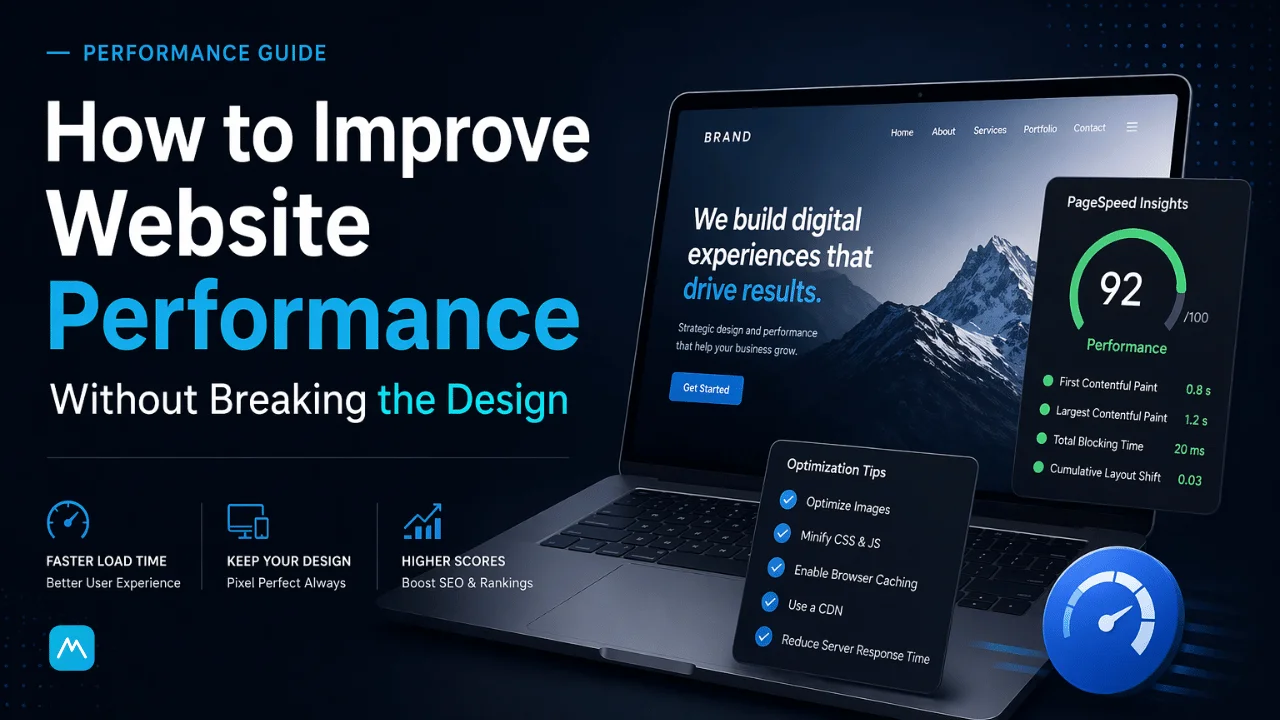
Performance is not just about speed scores. It is about reducing friction for users while keeping the UI visually strong, stable, and responsive. The best optimizations improve Core Web Vitals, lower server cost, and keep the interface intact.
Start with the biggest bottlenecks
Before changing code, identify where time is being lost. In most projects, the biggest issues are large images, unoptimized JavaScript, render-blocking CSS, and slow backend queries. Fixing the top 20 percent of issues usually gives you 80 percent of the gains.
“Performance work should remove wasted work, not remove useful features.”
- Compress and resize images before upload.
- Defer non-critical JavaScript.
- Inline only the CSS needed above the fold.
- Cache API responses and database queries where possible.
Practical comparison
The table below shows a simple before-and-after view of common optimization targets.
| Area | Before | After | Impact |
|---|---|---|---|
| Images | Large JPEGs | WebP with lazy loading | Lower bandwidth and faster paint |
| Scripts | Blocking on load | Deferred or split chunks | Improved interactivity |
| Styles | Unminified global CSS | Critical CSS + minified assets | Faster first render |
| Backend | Repeated queries | Query caching | Reduced TTFB |
Example: lazy loading an image
A small implementation change can make a noticeable difference. This pattern keeps the browser from loading off-screen images too early.
Keep width and height attributes in place so the layout does not jump when the image loads.
Keep width and height attributes in place so the layout does not jump when the image loads.
What to measure
You should track real results, not just opinions. Focus on metrics that affect users directly.
Largest Contentful Paint
Measures how quickly the main content becomes visible.
Interaction to Next Paint
Shows how responsive the page feels when users click or tap.
Cumulative Layout Shift
Tracks unexpected movement in the layout while the page loads.
Need help improving your site?
If your website feels slow, we can audit performance, clean up assets, and improve frontend and backend efficiency without ruining the design.